Food-Grade Belt Conveyor
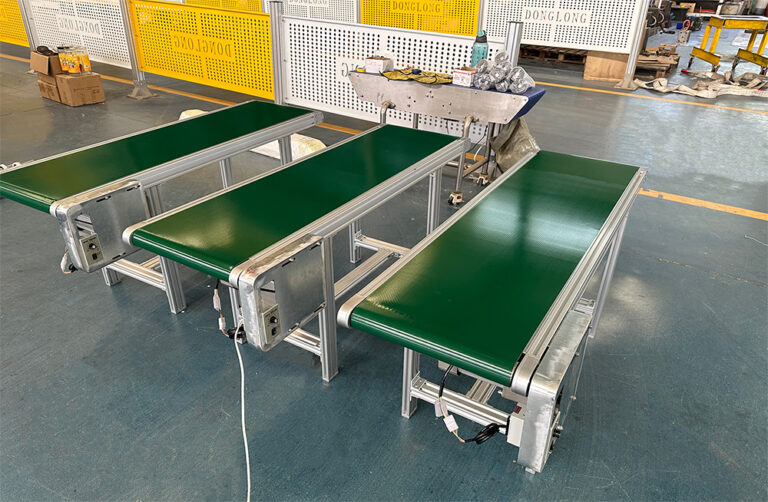
Food-grade belt conveyors are specialized conveying equipment designed for industries with strict hygiene requirements, such as food and pharmaceuticals. Centered on four core design principles—safety, hygiene, stability, and compliance—they serve as critical components in automated food production lines.
Core Features
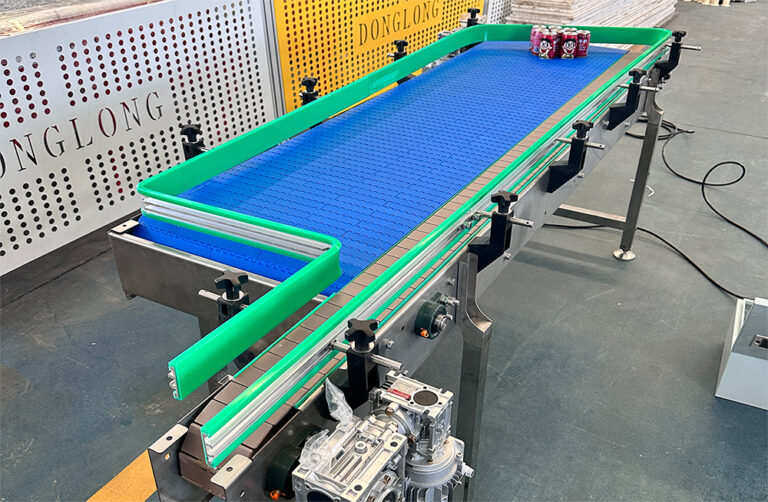
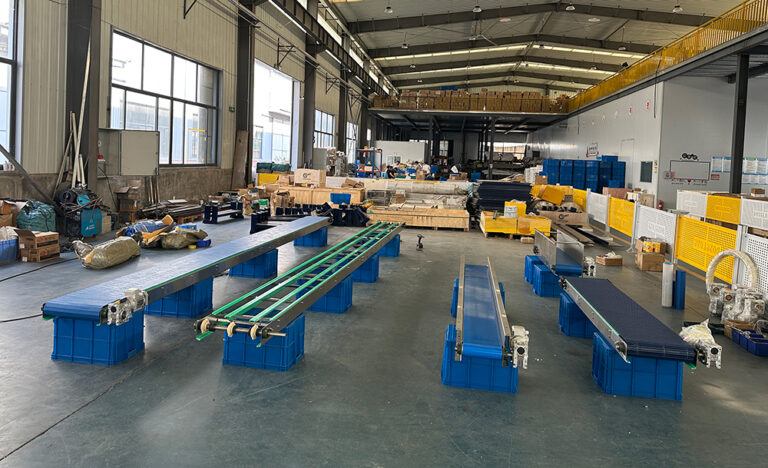
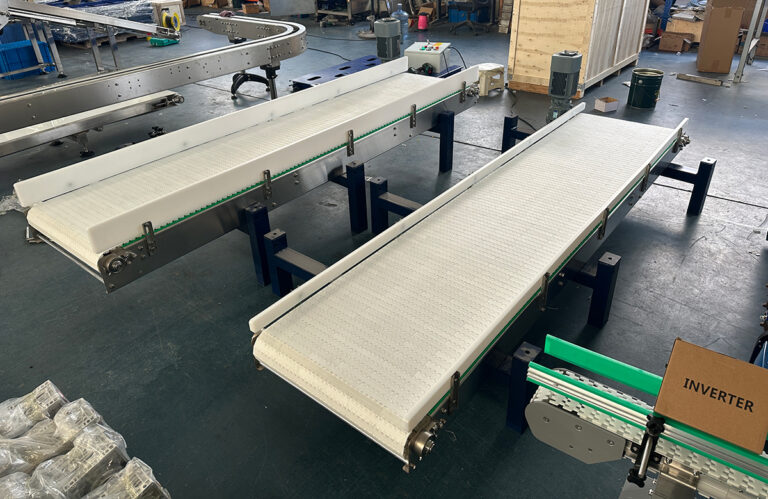
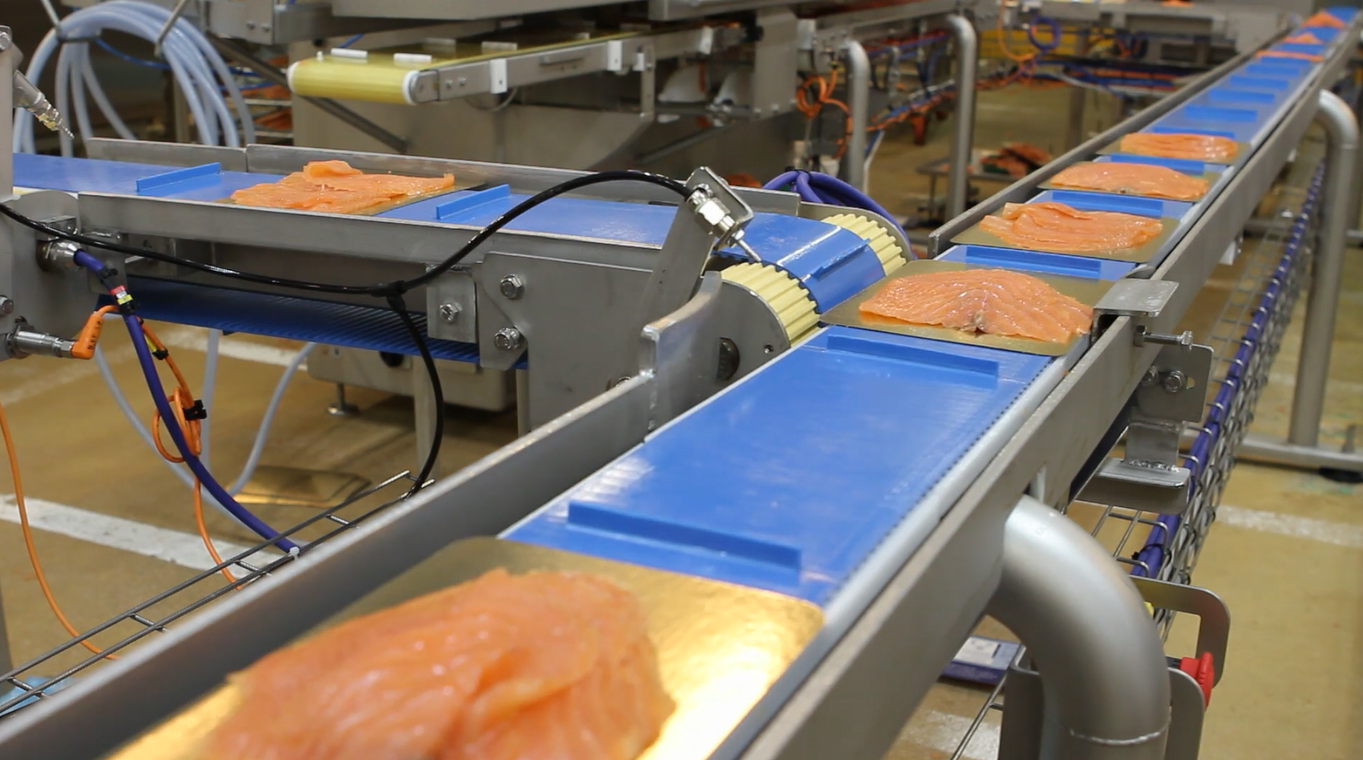
Food-Grade Safe Materials: The conveyor belt is made of food-grade blue PU or silicone, which is odorless, non-toxic, and free of harmful substances. It meets food contact safety standards and prevents contamination of ingredients like salmon. The frame is typically constructed from 304 stainless steel, which is corrosion-resistant, has no dead spaces, and is suitable for the rigorous cleaning and disinfection processes in food factories.
High-Precision Smooth Conveying: The equipment operates with low noise and vibration, featuring a uniformly adjustable conveying speed. It can precisely carry salmon fillets without causing shifting, deformation, or damage, ensuring product integrity during processing.
Modular Easy-to-Clean Design: The structure is designed for quick disassembly and cleaning, with smooth surfaces free of hygiene dead spots. It supports the CIP (Clean-in-Place) cleaning processes commonly used in food factories, effectively preventing bacterial growth and meeting food industry hygiene standards.
High Flexibility and Adaptability: It seamlessly integrates with upstream and downstream equipment (such as slicers, sorting machines, and packaging machines) and supports various conveying configurations, including turns, diverging, and converging lines. This makes it highly adaptable to the complex production layouts of seafood processing plants.
Core Advantages
Hygiene and Safety Assurance: The combination of food-grade materials and an easy-to-clean design eliminates the risk of ingredient contamination at the source. It complies with key food industry hygiene certifications like HACCP and FDA, making it a compliant choice for food processing.
Low Waste and High Stability: The belt is anti-slip, wear-resistant, and gentle on materials. Stable conveying significantly reduces the breakage rate of ingredients like salmon, minimizing production losses. The stainless steel frame is corrosion-resistant and temperature-resistant, ensuring a long service life with low maintenance costs.
Improved Production Efficiency: Automated continuous conveying replaces manual handling, enabling fully automated flow of salmon from slicing to packaging. This greatly boosts production efficiency while reducing hygiene risks associated with human contact.
Customization and Adaptability: It can be customized according to ingredient size and production line layout, including belt width, conveying speed, machine length, and auxiliary fixtures, perfectly meeting the personalized needs of seafood processing.
Typical Applications
Seafood Processing Industry: It is the core conveying equipment for processing salmon, cod, and other fish fillets or blocks. It is widely used in automated seafood processing plants for post-slicing conveying, sorting and distribution, and pre-packaging conveying.
Other Food Processing Scenarios: It is also suitable for the processing of meat, fruits, vegetables, and baked goods, for use in raw material conveying, semi-finished product transfer, and finished product packaging processes, meeting the safe conveying needs of various food types.
Pharmaceutical and Cosmetics Industries: In industries with high hygiene requirements, such as pharmaceuticals and cosmetics, the belt material and structure can be adjusted to achieve dust-free and pollution-free conveying of medicines and cosmetic products.