Plastic modular belts have become one of the most widely used conveying solutions in modern manufacturing industries. Compared with traditional conveyor belts, they offer higher durability, flexible configurations, easy maintenance, and excellent hygienic performance.
With different surface structures and module designs, plastic modular belts can be used in food processing, packaging, logistics, automotive manufacturing, pharmaceutical production, and many other industrial applications.
This guide introduces the most common types of plastic modular belts and explains their features, advantages, and recommended applications to help you select the right solution for your conveyor system.
Why Choose Plastic Modular Belts?
Plastic modular belts are manufactured using high-quality engineering plastics such as POM, PP, and PE. Their modular construction allows damaged sections to be replaced individually, reducing maintenance costs and minimizing production downtime.
Compared with traditional conveyor belts, plastic modular belts provide better flexibility, longer service life, and easier cleaning, making them ideal for modern automated production lines.
Key Advantages
✔ Long service life
✔ Easy maintenance
✔ Excellent wear resistance
✔ Hygienic design
✔ High load capacity
✔ Suitable for curved conveyors
✔ Food-grade materials available
✔ Multiple surface designs
Comparison of different plastic module mesh belts
| Modular Belt Type | Surface Structure | Primary Advantages | Recommended Industries |
|---|---|---|---|
| Flat Top Modular Belt | Closed Flat Surface | Smooth conveying, excellent product stability | Packaging, Electronics, Pharmaceuticals |
| Flat Grid Modular Belt | Open Grid Surface | Superior drainage, ventilation, and hygiene | Food Processing, Seafood, Vegetable Washing |
| Roller Top Modular Belt | Built-in Rollers | Product rotation, sorting, and accumulation | Logistics, Warehousing, Parcel Handling |
| Raised Rib Modular Belt | Raised Rib Surface | Enhanced airflow and faster product cooling | Bakery, Fresh Produce, Cooling Systems |
| Perforated Modular Belt | Perforated Surface | Quick drainage and easy cleaning | Food Processing, Drying, Cleaning Equipment |
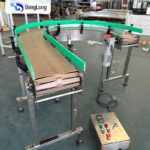
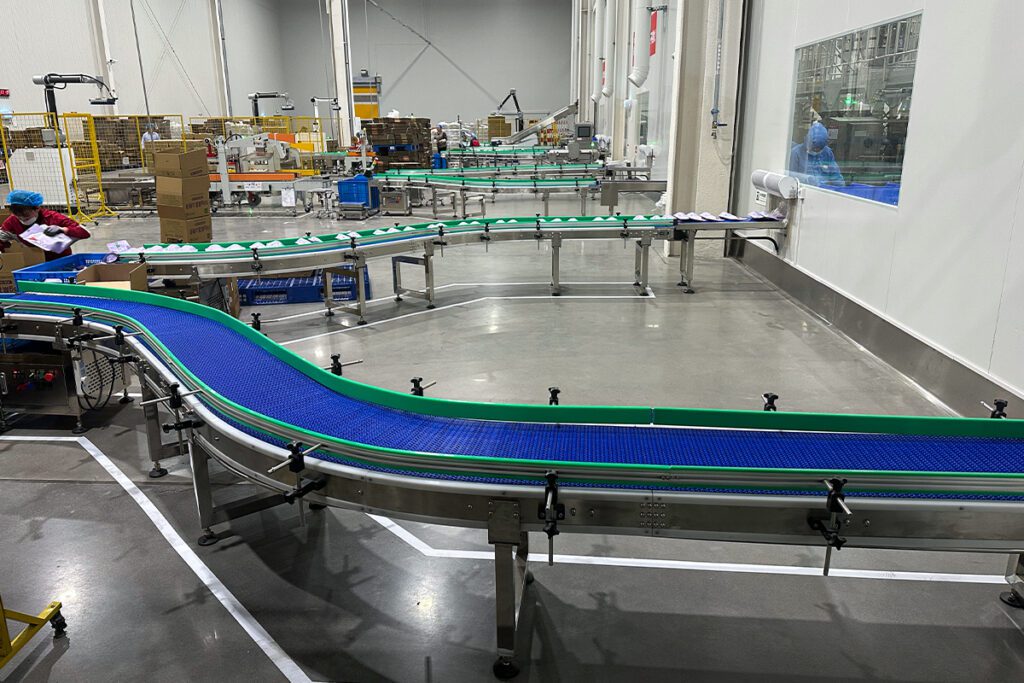
| Turning Modular Belt | Curved Modular Structure | Flexible conveyor layouts and smooth corner transfer | Packaging, Beverage, Factory Automation |
常见问题解答
常见问题
What are the main types of plastic modular belts?
The main types of plastic modular belts include flat top belts, flat grid belts, flush grid belts, raised rib belts, perforated belts, roller top belts, rubber top belts, curved modular belts, side-flexing belts, and heavy-duty modular belts. Each design is suitable for different conveying requirements and industrial applications.
Which plastic modular belt is best for food processing?
Flat grid, flush grid, and perforated modular belts are commonly used in food processing. Their open surface allows water, air, and cleaning solutions to pass through, making them suitable for washing, cooling, drying, freezing, and sanitary conveying applications.
What is a flat top modular belt used for?
Flat top modular belts have a smooth and closed conveying surface. They are widely used for packaging, beverage production, electronics assembly, pharmaceutical conveying, and general industrial applications where stable product support is required.
What is the advantage of a roller top modular belt?
Roller top modular belts contain integrated rollers that allow products to move, rotate, align, merge, or transfer in different directions. They are ideal for sorting, accumulation, logistics, warehouse automation, and distribution systems.
Can plastic modular belts be used on curved conveyors?
Yes. Curved and side-flexing modular belts are specifically designed for conveyor systems with bends and directional changes. They allow products to travel smoothly around corners while maintaining stable belt operation.
What materials are plastic modular belts made from?
Plastic modular belts are commonly manufactured from engineering plastics such as polypropylene, polyethylene, and acetal. The correct material depends on temperature, chemical exposure, load requirements, hygiene standards, and the operating environment.
Are plastic modular belts suitable for high-temperature applications?
Some plastic modular belts can operate in elevated-temperature environments, but the allowable temperature depends on the belt material and operating conditions. The working temperature, product temperature, and cleaning process should be confirmed before selection.
How do I choose the right plastic modular belt?
Consider the product size and weight, conveyor speed, surface requirements, operating temperature, cleaning frequency, load capacity, conveyor layout, and industry hygiene standards. A professional conveyor supplier can recommend the correct belt material, surface design, pitch, and sprocket configuration.
Can damaged modular belt sections be replaced?
Yes. One of the main advantages of a plastic modular belt is its replaceable modular structure. Damaged modules or sections can usually be removed and replaced without changing the entire belt, helping reduce maintenance time and operating costs.
How long does a plastic modular belt last?
Service life depends on the load, speed, material, working environment, alignment, cleaning method, and maintenance quality. Correct belt selection and regular inspection can significantly extend the operating life of the conveyor system.
结论
Plastic modular mesh belts, with their advantages such as wear resistance, corrosion resistance, easy maintenance, long service life and strong adaptability, have become an important part of modern industrial conveying systems. Different types of modular mesh belts have their own characteristics and are suitable for various production scenarios and industry demands.
As a professional manufacturer of conveying equipment, DongLong offers a wide range of plastic modular mesh belts, conveyor chain plates, sprockets and customized conveying system solutions in various specifications, which can be widely applied in industries such as food processing, packaging, logistics, automotive manufacturing, pharmaceuticals and automated production. Choosing the right module mesh belt can not only enhance production efficiency but also effectively reduce maintenance costs, creating higher long-term value for enterprises.