Why Flexible Conveyor Systems Stole the Spotlight at CeMAT ASIA 2026 – A Technical & Market Deep Dive
CeMAT ASIA 2026 – Asia’s largest intralogistics exhibition – has just wrapped up in Shanghai. And if there was one clear winner on the show floor, it was undoubtedly flexible conveyor systems.
From food processing to EV battery manufacturing, from e-commerce sortation to pharmaceutical cleanrooms, the buzzword across every hall was “flexibility.” But what does it really mean from a technical standpoint? And why should plant managers, maintenance engineers, and procurement directors care?
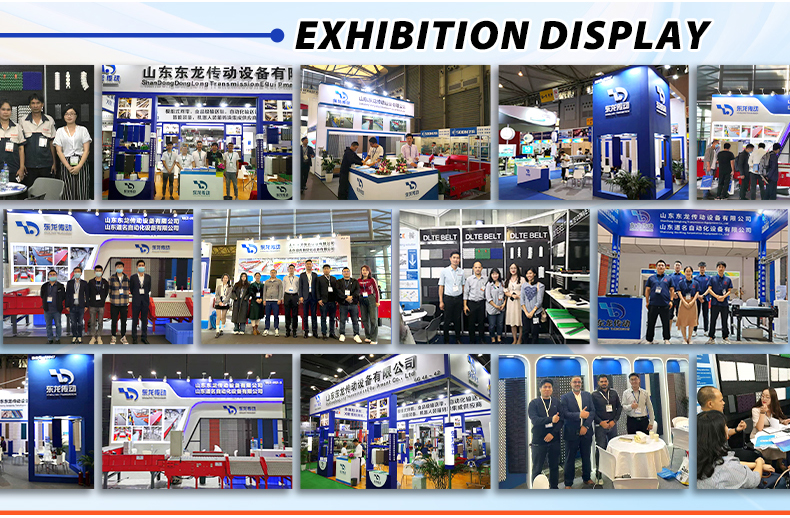
As a dedicated manufacturer with over 15 years of experience in the conveying industry, Shandong Donglong Transmission Equipment Co., Ltd. (DongLong) exhibited our latest modular solutions at CeMAT. Based on hundreds of conversations with industry professionals at the show, here is our technical-yet-practical analysis of why flexible conveyor technology is now a “must-have” – not just a “nice-to-have.”
1. Technical Breakdown: What Makes a Conveyor System “Truly Flexible”?
To many, “flexible” simply means “can turn a corner.” But to a design or maintenance engineer, true flexibility rests on four pillars:
A. Modular Architecture (The “Lego” Principle)
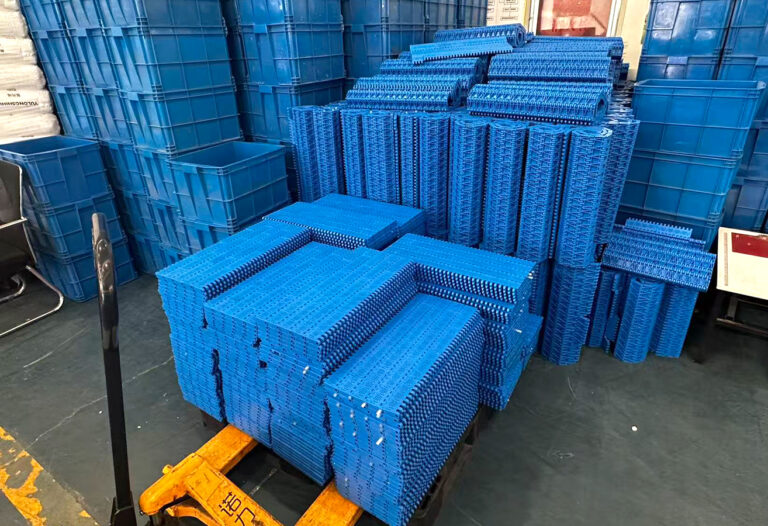
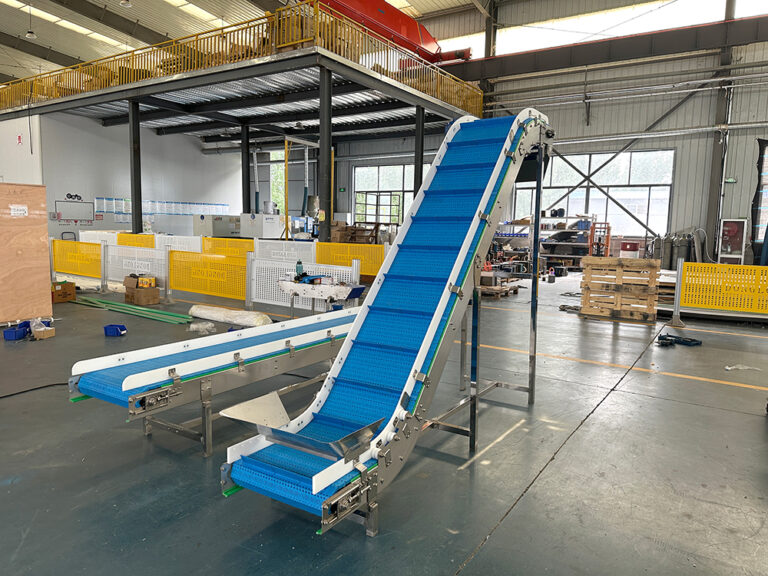
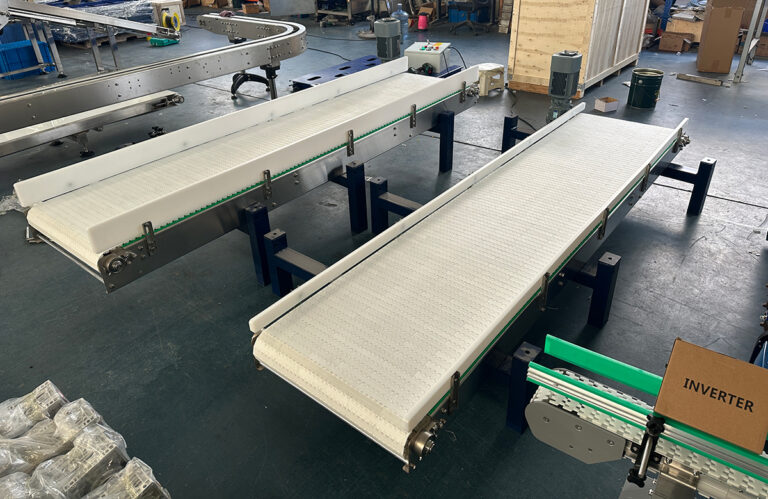
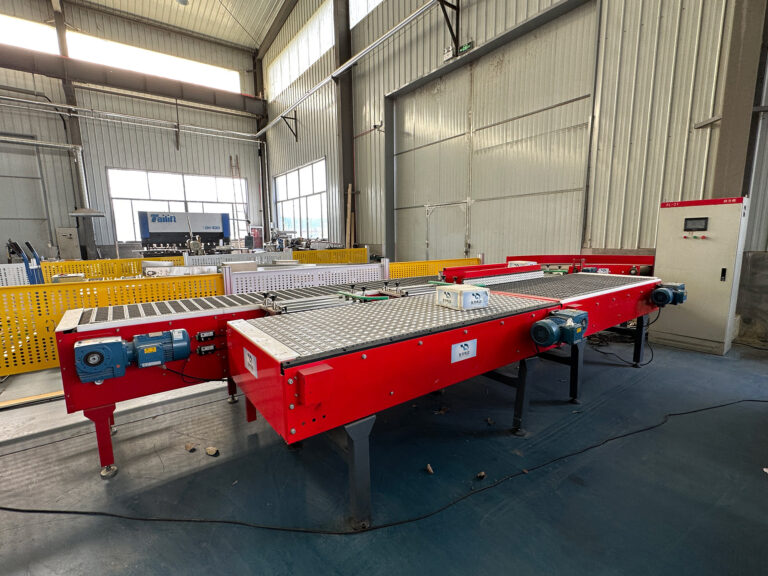
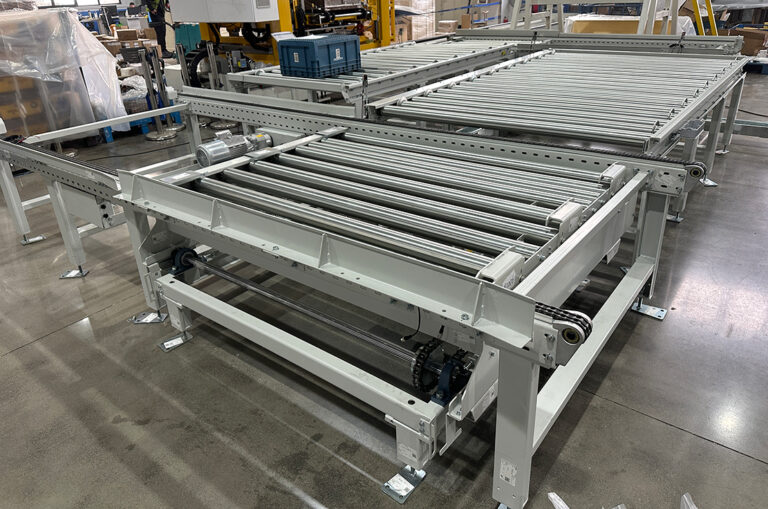
A flexible conveyor uses standardized plastic modules that can be assembled, disassembled, or reconfigured without special tools. Our DongLong modular belt conveyor platform allows users to:
- Change conveying width from 200mm to 1000mm by adding or removing rows of flexible chain
- Convert a straight section into a curve conveyor in under 30 minutes by swapping guide rails and sprockets
- Replace a damaged section without dismantling the entire line – saving hours of downtime
Key component: Our patented flexible chain (available in PP, POM, and PE) features a pin-and-slot connection that maintains tensile strength (up to 25,000 N/m) while allowing lateral bending down to 1.5× belt width radius.
B. Advanced Guiding & Tracking Technology
A conveyor belt is only as good as its tracking system. At CeMAT, we demonstrated how precision-engineered guide rails and wear strips eliminate the most common failure point: belt misalignment.
- Our guide rail system uses a tapered profile that self-centers the modular belt, reducing edge wear by 40% compared to conventional L-shaped guides
- Wear strips made from UHMW-PE (ultra-high molecular weight polyethylene) offer a friction coefficient of just 0.1-0.2, significantly extending the life of both the belt and the supporting structure
C. Component Standardization (Fewer SKUs, More Configurations)
The hidden cost of “custom” conveyors is spare parts chaos. DongLong designed our conveyor systems around a limited set of interchangeable components:
- One sprocket design fits multiple belt types (flat top, flush grid, raised rib)
- Our wear strips are reversible, doubling service life
- Keel chain and stainless steel flat top chain share the same pitch (25.4mm or 50.8mm), allowing hybrid lines
This means you can stock 70% fewer SKUs while covering 90% of potential repair scenarios.
2. Applications That Demand Flexibility: Where DongLong Solutions Excel
Based on customer feedback at CeMAT 2026, here are the three fastest-growing applications for flexible conveyors – and the specific DongLong technology that solves each challenge:
🏭 Application 1: EV Battery Cell Handling (Clean, Anti-Static)
The Challenge: Lithium battery cells are sensitive to electrostatic discharge (ESD) and contamination. Traditional PVC or PU belts generate static and shed particles.
The DongLong Solution:
- Modular belt with conductive PP material (surface resistivity < 10⁶ ohms) and PU belt options for non-ESD zones
- Stainless steel mesh chain for drying oven infeeds (temperature rating: -40°C to +150°C)
- Wear strips with carbon fiber additive to prevent static buildup
🍣 Application 2: Automated Sushi & Revolving Restaurant Systems
The Challenge: Sushi conveyors (often called revolving belt systems) require ultra-low noise (<55 dB), food-contact safety, and aesthetically pleasing colors.
The DongLong Solution:
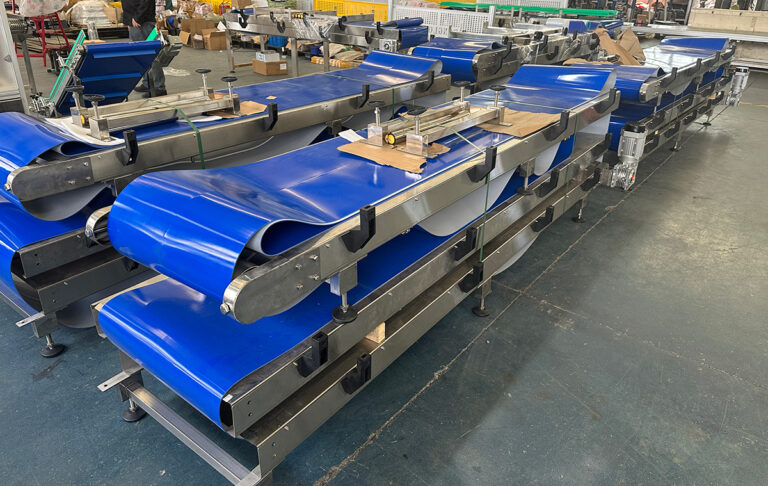
- Flat top chain conveyor with smooth, non-porous surface – easy to clean and FDA-approved
- Custom-colored modular belt (black, red, green, wood-grain) to match restaurant branding
- Guide rail system with integrated noise-dampening pads – 30% quieter than standard metal guides
🥫 Application 3: Beverage Canning & Bottling Lines (High-Speed, Wet Environment)
The Challenge: Speeds exceeding 200 cans/minute, frequent washdowns with caustic chemicals, and the risk of “can jams” on curves.
The DongLong Solution:
- Stainless steel flat top chain with 304-grade links – corrosion-resistant and easy to sanitize
- Curve conveyor with magnetic side guides (optional) to prevent lightweight aluminum cans from tipping
- Sprocket with self-cleaning pockets – reduces debris accumulation by 70% compared to open designs
3. Marketing Takeaway: Why Choosing DongLong Reduces Your Total Cost of Ownership (TCO)
Technical advantages mean little if they don’t translate into business value. Here’s how our flexible conveyor technology directly impacts your bottom line:
| Challenge | Standard Conveyor | DongLong Flexible System | TCO Impact |
|---|---|---|---|
| Production line changes | Replace entire conveyor ($5k-$20k) | Reconfigure modules & rails (<$500) | 60-80% lower modification cost |
| Belt tracking issues | Weekly manual adjustments (labor cost) | Self-centering guide rail | 90% less maintenance time |
| Spare parts inventory | 200+ unique SKUs | 50 interchangeable SKUs | 75% lower inventory value |
| Unplanned downtime | 4-6 hours to replace belt section | <30 minutes to swap modular section | 85% shorter downtime |
Real-world example: A DongLong customer in the dairy industry replaced their traditional PVC conveyor with our flexible chain system. Result? Changeover time between product sizes dropped from 90 minutes to 12 minutes – saving over 250 labor hours annually.
4. Looking Ahead: What’s Next in Flexible Conveyor Technology?
Based on trends observed at CeMAT ASIA 2026, here’s what DongLong is developing for 2027-2028:
- Smart wear strips: Embedded with RFID tags that track wear thickness and send maintenance alerts when replacement is needed
- Hybrid belting: A single modular belt conveyor that switches between flat top (for stable items) and raised rib (for slippery items) via a manual flip mechanism
- Energy recovery sprockets: Using low-friction sprocket designs combined with regenerative braking on downhill sections – targeting 15% energy savings
We are actively piloting these technologies with early-adopter customers. Contact us if you want to be among the first to test.
5. Why DongLong? A Brief Technical Credentials Summary
Shandong Donglong Transmission Equipment Co., Ltd. is not a trading company – we are a factory-direct manufacturer with:
- Over 200 in-house molds for modular belt, flat top chain, keel chain, and stainless steel flat top chain
- ISO 9001:2025 certified quality management system
- FDA, EU, and USDA-compliant food-grade materials available
- Typical lead time: 7 days for standard conveyor belt, 15-20 days for custom conveyor systems
- Global references: 1,200+ customers worldwide, including beverage, automotive, and logistics leaders
Ready to Make Your Production Line Truly Flexible?
Whether you need a single curve conveyor for a bottleneck turn, a complete sushi conveyor system for a new restaurant, or a high-speed stainless steel flat top chain for a beverage line – DongLong has the technical expertise and manufacturing capacity to deliver.
📧 电子邮件: sale@dlte.cn
📞 Tel / WhatsApp: +86 13573105887
🌐 Web: www.donglong-conveyor.com
—— Professionalism starts with every module. DongLong, your flexible conveyor expert.