Belt Turning Conveyor Equipment
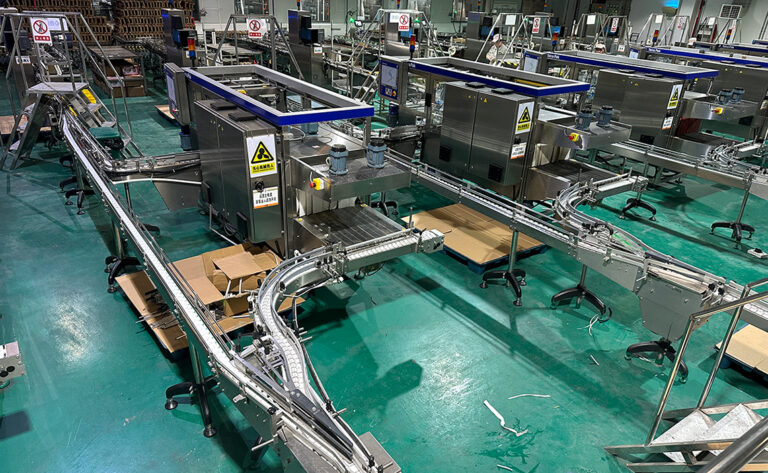
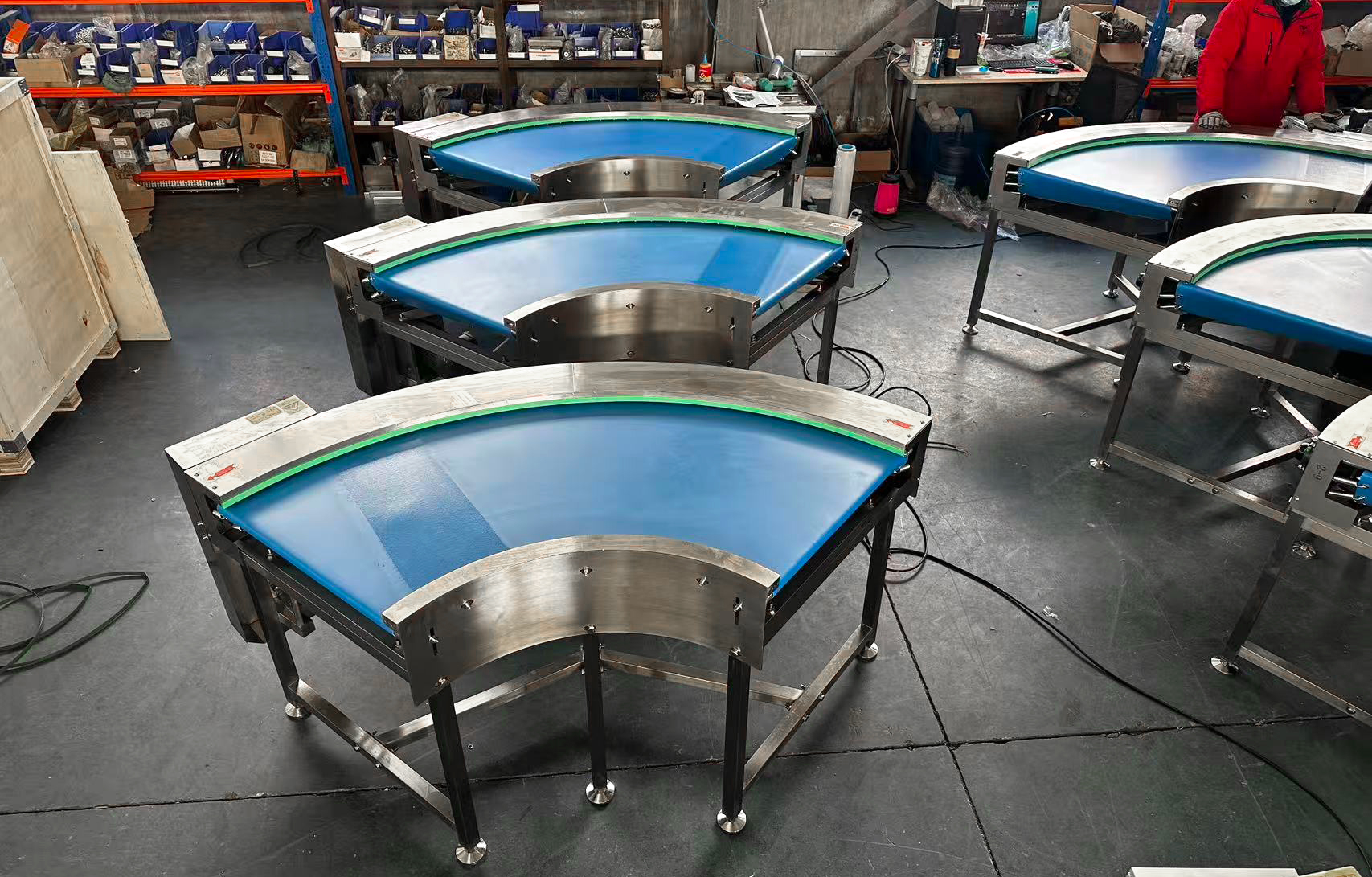
Belt Turning Conveyor Equipment (Belt Turning Conveyor) is a continuous conveying device that realizes material turning at 90°, 180° or any angle. Its core is to guide the belt to turn smoothly through a special structure, connect with linear conveying systems, and complete continuous material flow in space.
1. Basic Structure
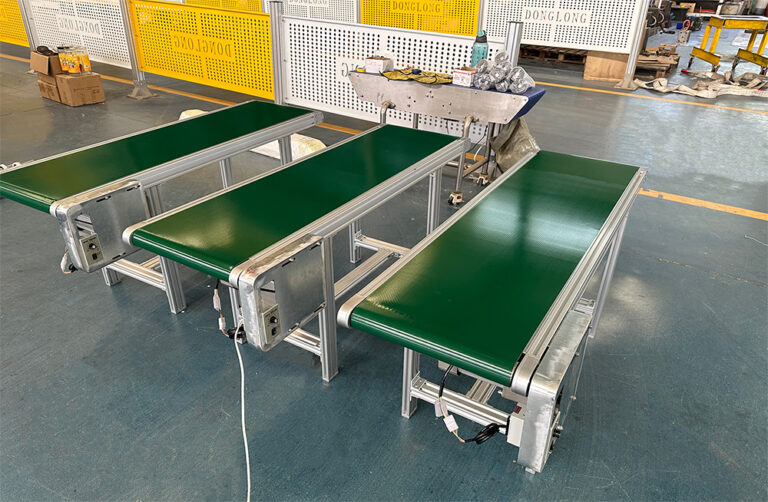
Frame: Carbon steel, stainless steel, aluminum profile, suitable for different working conditions.
Transmission System: Driven by gear motor / motorized pulley, with variable frequency / stepless speed regulation.
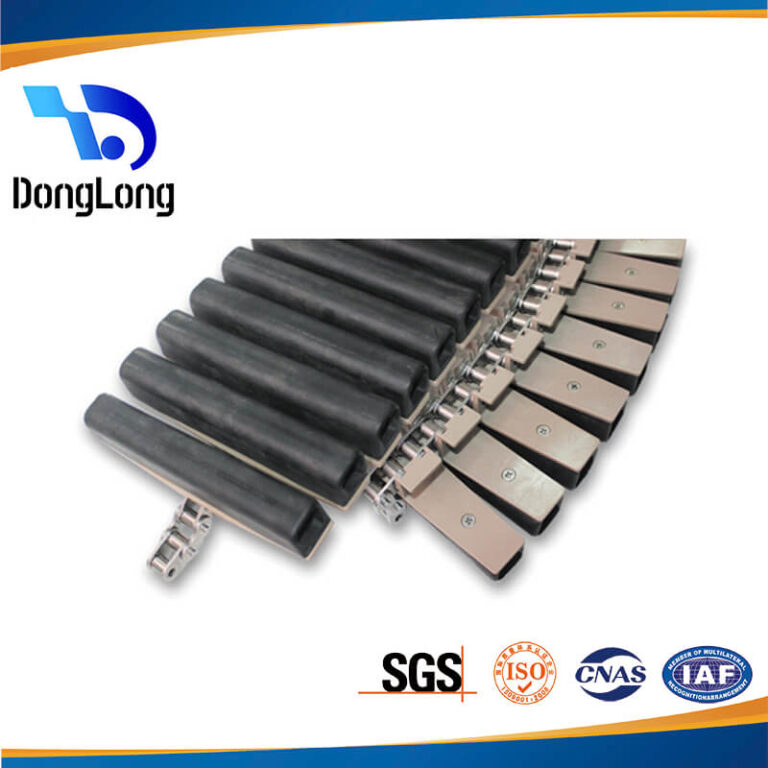
Turning Mechanism: Tapered rollers, fan-shaped belts, anti-deviation rollers / guide ribs, curved guide rails.
Conveying Belt: PVC, PU, rubber, food-grade silicone, etc., with optional skirts / baffles.
2. Working Principle
Through the speed difference of tapered rollers or forced guide structure, the belt runs along the preset arc; materials turn synchronously with the belt without relative sliding, achieving smooth direction change.
3. Main Types
Natural Turning Type: Large radius, low speed, turning by belt flexibility and roller layout, suitable for long-distance and spacious scenarios.
Forced Guide Type: Small radius, high precision, forced deviation correction by tapered rollers + guide rails / guide ribs, suitable for compact spaces, high speed / heavy load.
Standard Angle Type: Fixed angles such as 90° and 180°, modular design for quick line connection.
Core Features
High Space Utilization: Minimum turning radius can reach 10–50 times the belt width, flexibly bypassing columns / equipment and reducing floor space.
Stable Conveying: No relative movement between materials and belt, anti-collision and anti-damage, suitable for fragile / precision parts.
Reliable Operation: Anti-deviation design, stable belt tension, low failure rate in continuous operation.
Low Noise & Energy Saving: Simple structure, few rotating parts, low noise, low energy consumption and maintenance cost.
Strong Adaptability: Various belt materials (oil-resistant / corrosion-resistant / food-grade), with optional skirts, baffles and worktables.
Easy Integration: Modular design, seamlessly connected with linear conveyors, sorting lines and packaging lines.
Typical Application Scenarios
1. Food & Beverage Industry
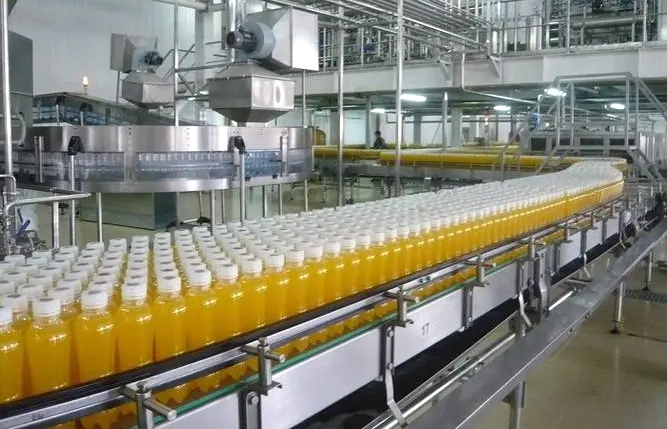
Turning conveying and packaging line connection for bottled / canned drinks, snack foods and baked goods.Hygienic conveying of fresh food, meat products and dairy products (food-grade PU / silicone belt).
2. Electronics & Light Industry Manufacturing
Turning of assembly / inspection / packaging lines for electronic components, home appliances, toys and daily chemical products.Smooth turning of precision instruments and PCBs, anti-collision and anti-static.
3. Logistics & Warehouse Sorting
90°/180° diversion and confluence of e-commerce / express parcels, cartons and turnover boxes.Circular conveying and automatic sorting systems in warehousing and distribution centers.
4. Pharmaceutical & Daily Chemical Industry
Clean conveying of medicines, health products and cosmetics, meeting GMP requirements.
5. Other Industries
Production line turning in tobacco, hardware, auto parts and wood processing.Automatic sorting and conveying of airport luggage and postal parcels.